
ORIGIN TRANSITION STRATEGY
Turning a Healthy
Snack Company’s Family Farm
Into a Regenerative Innovation Site
We partnered with Artisan Tropic – a Colombian healthy snack producer – to support the transition to sourcing from a more regenerative supply system. A key part of that strategy was to transform their family farm into a site that showcases regenerative cassava and plantain production.
Services
context assessment
stakeholder engagement
capacity building
supply system assessment
cropping concept development
financial modeling
Partners
Terra Genesis
Artisan Tropic


Project Context
Artisan Tropic, a Colombian family-owned company, produces healthy snacks sold internationally, including at Whole Foods in the U.S. Committed to be a sustainability leader, they sought to transition to regenerative sourcing practices that restore farm and landscape health.
Our collaboration focused on two key areas: Firstly, assessing their supply system to identify key investments in order to shift towards regeneration. Secondly, developing a regenerative agriculture concept for their company farm and their farmers network – to demonstrate the viability of growing demanding crops like plantain and cassava in a regenerative way.
Process
We worked closely with Artisan Tropic’s team to align on vision, goals, and strategy, providing training to build their understanding of regenerative agriculture and sourcing. An in-depth assessment of the supply chain identified key opportunities for transitioning to regenerative practices. Through site visits and technical analysis, we assessed the company and outgrower farms, resulting in a concept with multiple cropping concepts to demonstrate how plantain and cassava can be cultivated in diversified agroforestry systems.
Click on a toggle to learn more:
Stakeholder Engagement
Achieving lasting regenerative outcomes requires a long-term vision, commitment, and a shift to a new collaborative paradigm. It’s essential that all key stakeholders—particularly buyers and producers—are aligned on long-term goals, approaches and key aspects required to regenerate the agricultural systems they are working on. We engage all stakeholders in a foundational process that develops their ability to think and operate from a regenerative perspective. Stakeholder engagement is critical because it builds the trust, mutual understanding and healthy relationships that are required for long-term project success.
Supply System Assessment
A supply system assessment provides valuable insights into the current sourcing practices and identifies opportunities for improvement. By evaluating the entire supply chain, it enables clients to pinpoint key areas for transitioning towards regenerative sourcing, ensuring greater sustainability, traceability, and long-term resilience. This assessment helps clients align their supply systems with ecological goals while optimizing efficiency and reducing environmental impact.
Capacity Building
Regeneration requires thinking and working from a different paradigm. In order for project stakeholders to align and effectively work together, we engage them in a collaborative process that develops their thinking around what regeneration means in their context. This can take the form of webinars with primers on regenerative agriculture or development, or more in-depth workshopping that evolves everyone’s thinking about the work at hand. Since regeneration is an ever-evolving process, the capacities of the stakeholders need to evolve with the project.
Cropping Concept Development
Cropping concepts are a valuable tool for developing systems that enhance both ecological and financial resilience. Our tailored strategies optimize land use, strengthen ecosystem services, and improve soil health and biodiversity. This process involves context assessment, technical analysis, and close collaboration with local stakeholders, including technicians and farmers. We also use various modeling techniques to assess financial implications and carbon impact projections. Ultimately, this approach improves yields, boosts long-term profitability, and delivers both environmental and economic value.
Technical Analysis
Technical analysis provides in-depth insights into specific aspects of a site, production system, or region as part of our regenerative work. It often includes GIS analysis and covers areas such as slope and gradient, land use, hydrology and watersheds, and forest cover. By using this detailed data, we help clients make informed decisions that optimize land use, improve ecological resilience, and support the successful implementation of regenerative practices.
Financial Modeling
Financial modeling provides insight into the financial viability of a proposed cropping concept, production system or development intervention. The scope of the modeling may vary, ranging from establishing basic financial viability of a cropping concept, to establishing estimates for origin transition costs, feasible price points, price premium structures, and the cost of de-risking farmers during a regenerative transition.
Outcomes
Team Alignment On Regenerative Approach
Engaged Artisan Tropic’s team in a series of work sessions to align on project vision, desired regenerative outcomes and development approach
Identification of Key Intervention Areas in Supply System
Uncovered the sourcing patterns and impacts of the company’s supply system on the landscape and farming community, and proposed regenerative sourcing alternatives.
Detailed Analysis of Farm Site Opportunities & Constraints
Identified unique opportunities, constraints and development potential associated with the farm site, which informed the context-specific cropping concepts
Context-Specific Farm Design & Cropping Concepts
Created overall farm design and multiple cropping concepts to demonstrate potential of growing cassava and plantain in diversified agroforestry systems
Financial Implications & Viability of Cropping Concepts
Conducted financial modeling to demonstrate financial implications and viability of proposed cropping concepts
Stakeholder Capacity Development to Engage With Regenerative Approach
Developed capacities of Artisan Tropic’s team to engage with regenerative agriculture and sourcing processes
Explore our work
Raising the Bar for the Coffee Industry: Regenerative Transition at Scale
Blue Bottle Coffee
Developing aspirational, industry-leading transition strategies for coffee origins in Mexico, Colombia, Peru, and Ethiopia

Climate Resilient Design for Arabica and Robusta Coffee in Nicaragua
Lavazza
Cropping concept development through a collaborative process that involves farmers, exporters, and the roaster

Turning a Healthy Snack Company’s Family Farm Into a Regenerative Innovation Site
Artisan Tropic
Farm design that shows the possibilities of regeneratively grown cassava and plantain in diversified agroforestry systems

Collaborating With Timberland and Smallholders to Bring Cotton Back to Haiti
SFA Haiti
Partnering with Haitian smallholder farmers on the long-term development of regenerative cotton in Haiti. Resulting in the first shoe brought to market with Haitian cotton.

Leading Research on Scaling Regenerative Agriculture With Smallholder Farmers
Rockefeller Foundation | Regen 10
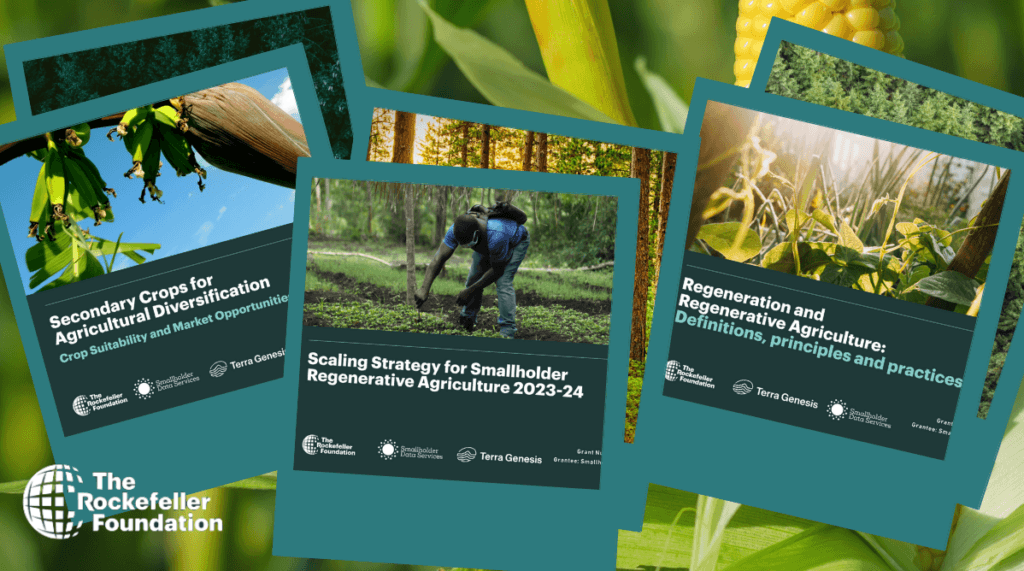
Series of studies that explore the financial viability of smallholder farming and pathways to scale regenerative agriculture through innovation & crop diversification
Innovating Conservation: Reconciling Orangutan Habitat With Regenerative Palm Oil
SOS Sumatra | Faith in Nature
Conducting a study to assess the feasibility of integrating wildlife corridors for orangutans with regenerative palm oil agroforestry in Sumatra